The cause behind recurrent pregnancy loss can often be identified through a detailed investigation — and that gives the next pregnancy a safer start.
Summary
Recurrent pregnancy loss is not a single disease; it is the shared name for different biological causes that lead to the same outcome. That is why it cannot be explained by a single test and calls for a systematic investigation. After a detailed investigation, most couples can go on to a healthy pregnancy.
In this article
- What is recurrent pregnancy loss, and when is it investigated?
- Why isn’t “all my tests came back normal” enough?
- What uterine causes are involved in recurrent loss?
- How are genetic and chromosomal causes investigated?
- What are the clotting- and immune-related causes?
- What does examining the placenta show in recurrent loss?
- Is a healthy pregnancy possible after recurrent loss?
One of the sentences I hear most often in my clinic is, “Doctor, I’ve had every test done, and they were all normal.” Over the years, what has surprised me most is that in many couples told “everything is normal,” the investigation has not actually begun.
Yet what matters is which investigations were truly carried out. When the right, detailed work-up is done, the cause behind the losses can usually be found.
This article looks at when recurrent pregnancy loss should be investigated and which causes are examined; most of all, it shows that this process is not a dead end but a beginning. Recurrent pregnancy loss is, for a woman, often a tiring and wearing experience; that is why the right information matters as much as the right investigation.
What is recurrent pregnancy loss, and when is it investigated?
Recurrent pregnancy loss (habitual abortion) is the successive loss of pregnancies before the 20th week. The classic definition is three consecutive losses; but because the causes are nearly the same after two losses, the investigation usually begins after the second loss.
In some situations, waiting is not the right choice. If the mother is over 35 and the loss occurred after the 10th week, an earlier investigation is advised — because in these cases the likelihood of finding an underlying cause is high. An early investigation saves time for the next pregnancy; postponing it usually only loses time.
Today this approach rests not only on clinical experience but on international guidelines. The European Society of Human Reproduction and Embryology (ESHRE) defines recurrent pregnancy loss as two or more losses; studies show that the underlying causes after two losses are as similar as after three.
Why isn’t “all my tests came back normal” enough?
Because the tests that come back “normal” are often just a handful of basic ones. The investigation of recurrent pregnancy loss calls for a much wider frame; from the uterus to genetic causes, from clotting to the immune system, different headings are each assessed one by one. So a “normal” result does not mean the investigation is complete; even one missing heading can leave the real cause in shadow.
What matters is which tests were done and how thoroughly. The aim of the investigation is not only to find a cause; it is to rule out the possible causes in the right order and arrive at the mechanism that truly explains what happened. That is why the assessment proceeds according to a specific plan and order of priority.
What uterine causes are involved in recurrent loss?
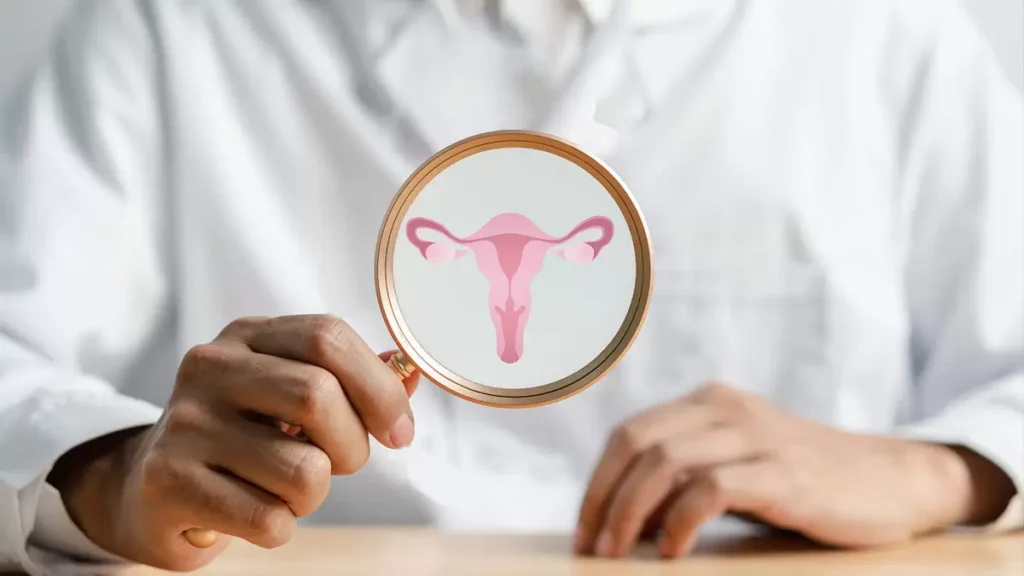
The most common group in recurrent loss is structural causes related to the uterus; the investigation usually starts here. A wall inside the uterus (a uterine septum) can make it harder for a pregnancy to implant and continue; fibroids can affect a pregnancy depending on where they sit. Adhesions and polyps inside the uterus are also among the causes that get missed, and sometimes intrauterine infections accompany the picture.
Most of these structural causes are identified with the right imaging and assessment; and once identified, many can be corrected. The inside of the uterus is examined in detail; when needed, a contrast X-ray of the uterus (hysterosalpingography) and a camera-based method (hysteroscopy) are used. A uterine septum, for instance, is corrected with hysteroscopy in suitable cases, and the chance of the next pregnancy continuing improves.
How are genetic and chromosomal causes investigated?
Genetic investigation runs in two directions; both the genetic makeup of the mother and father and that of the lost pregnancy are examined. In some couples, the mother or father carries a balanced rearrangement (translocation) in their chromosomes; that is why a chromosome analysis of both parents matters. But the investigation does not end there. Genetic examination of the pregnancy tissue is very valuable; here we look not only at chromosomes but at finer-level changes too.
Even if the parents’ chromosomes are normal, a genetic cause can be found in the baby; so “there is no problem in the family” does not mean the investigation is over. The layers of examination do not replace one another; each sees a different depth. Chromosome analysis (karyotype) captures only large structural changes; a microarray detects small losses and gains that cannot be seen by eye; whole-exome sequencing (WES) reaches down to changes at the single-gene level. Examination of the pregnancy tissue is especially valuable because it can point directly to the cause of the loss; if a cause still is not found, it is possible to go as far as whole-genome sequencing. As the investigation deepens, a cause emerges in some of the losses once considered “unexplained.”
What are the clotting- and immune-related causes?
These causes arise when the immune and clotting systems work against the pregnancy. They quietly affect the pregnancy by causing clotting in the small vessels of the placenta — the baby’s organ of nourishment — and often progress without any visible sign.
At the head of this group is antiphospholipid syndrome; a condition in which the immune system creates a tendency to clot. It calls for assessing certain antibodies together with an inherited clotting tendency (thrombophilia). What is decisive here is not only which test is ordered but when and how the result is interpreted; the same value can carry a completely different meaning depending on the week of the loss and the history.
In losses in the second trimester, the assessment widens; here immune-related causes, such as the natural killer (NK) cell response, are also examined. When a cause is found, close monitoring and a suitable approach can be planned for the next pregnancy. That is why the clotting-and-immunity heading is a part of the investigation that must not be skipped.
What does examining the placenta show in recurrent loss?
The tissue left behind after a loss sometimes carries the most revealing information. The placenta keeps what amounts to a record of everything that happened during the pregnancy; that is why, in suitable cases, a detailed histopathological examination — that is, under the microscope — is advised.
Here, who does the examining matters as much as the examination itself. Placental pathology is a specialty in its own right; this tissue tells far more when it passes through the assessment of an experienced perinatal pathologist rather than a routine look. That experienced eye distinguishes the subtle lesions a standard examination easily misses and that carry a risk of recurrence — such as chronic inflammation between the villi (chronic histiocytic intervillositis), widespread fibrin deposition, or villitis of unknown cause.
Most of these findings are the tissue-level reflection of clotting- and immune-related mechanisms. Their value lies not only in being detected but in being interpreted correctly together with the history of the loss. In other words, examining the placenta confirms with the eye what the blood tests point to; and sometimes it reveals a cause that only becomes visible this way.
Is a healthy pregnancy possible after recurrent loss?
Yes — in most cases it is. What is decisive is how detailed the investigation was — because a correctly identified cause can change the direction of the next pregnancy. In my own experience, once the investigation is complete, the rate of reaching a healthy pregnancy in suitable cases is usually above three in four.
A common mistake is to say “I have had every test done” and try to conceive again. The right course is to complete the investigation at an experienced center and then plan the pregnancy; because knowing which test to do, in which order, and how thoroughly changes the outcome. An incomplete or wrongly ordered investigation leaves the real cause in shadow; and even when no cause is found, advanced genetic examinations can open a new door.
Frequently Asked Questions
After how many miscarriages is an investigation done?
The classic definition is three consecutive losses. But because the causes are nearly the same after two losses, the investigation usually begins after the second. If the mother is over 35 or the loss occurred after the 10th week, an earlier investigation may be advised.
Why do I keep miscarrying when all my tests are normal?
A “normal” result usually does not mean the investigation is complete; often only the basic tests have been done. When the uterine, genetic, clotting, and immune headings are all examined in detail, a previously missed cause can be found.
Is a healthy pregnancy possible after recurrent miscarriage?
In most cases, yes. Once the investigation is completed at an experienced center, most couples can go on to a healthy pregnancy. What matters is not trying to conceive again before finishing the investigation.
I encourage women who have experienced recurrent pregnancy loss not to lose hope. In a significant share of losses, the cause can be identified through a detailed investigation; an assessment done at the right time and in the right order gives the next pregnancy a safer start.
Throughout my career I have accompanied many couples who had lost hope; most, at the end of this process, welcomed a healthy baby. Because a correctly identified cause often changes the whole course.
If you have experienced recurrent loss, we can meet to assess your situation with a detailed investigation. This is a path we continue to walk together.
Author: Prof. Dr. Arda Lembet
Specialist in Obstetrics, Gynecology, and Perinatology. He completed his fellowship in high-risk pregnancy (maternal–fetal medicine) at Mount Sinai in New York. For more than thirty-five years he has cared for women’s health as a physician. In recurrent pregnancy loss, preterm birth, and high-risk pregnancy, he works with a root-cause-focused, whole-person approach — investigating the underlying causes and assessing women’s health not through a single complaint but as a whole, through the connections between systems.
Legal note
This content is for informational purposes only. For an individual medical assessment, please book an appointment with your doctor.